
How videogames are made
Everything I know as an indie game developer

As I mentioned in a previous post, I’ve been making games for a good while now. One thing I love about it is being able to switch hats during the process: going from Dani the programmer to Dani the designer, or Dani the artist. Like I'm some kind of Barbie.
I really enjoy jumping between different roles. That way, if I’m frustrated or just not feeling it, I can always switch to something else that appeals to me more in the moment. Or maybe divine inspiration strikes for a different task, and I dive right into that.
So I thought, “illo Dani, why don't you talk about the basics of each role?” Not as an exhaustive guide, that would take a whole book, but just as a first look at how I create my games. It might even serve as a starting point if one of these areas sparks your interest.
Art
I like using pixel art in my games because it’s fast to produce compared to other styles, and I love the feel it brings to a game.
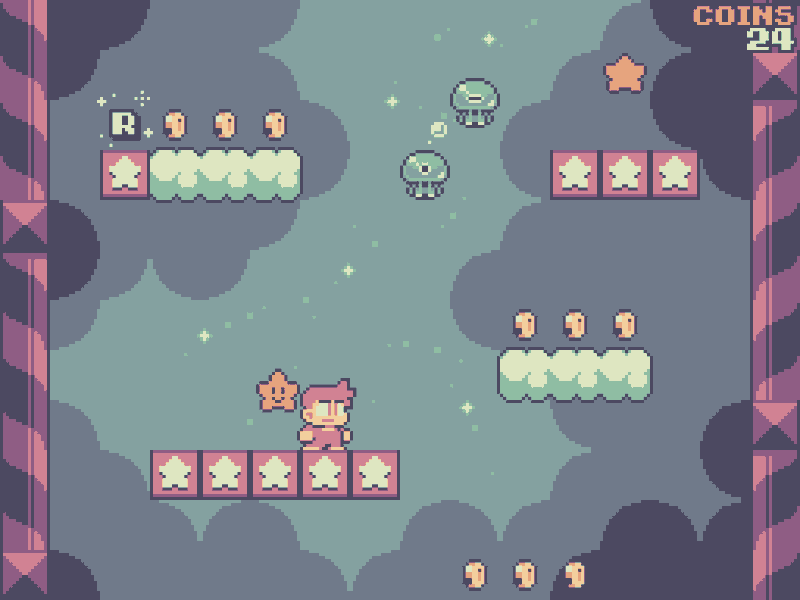
Mind you, don't mistake “fast to produce” for easy. When a seemingly silly decision, like placing a pixel one space up or down, can completely change how a sprite is read, you can't really call the medium easy. That’s actually the beauty of pixel art: you’re playing with how the mind interprets what it’s seeing, rather than providing an objective, literal drawing.
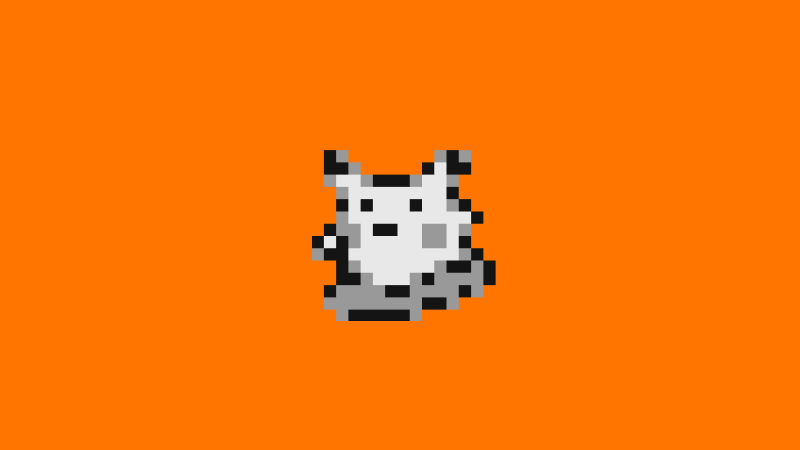
I use Aseprite, the gold standard for pixel art software, though there are plenty of others. Pixel art is a very democratized and accessible medium; any tool will do. Use Paint if you want.
Beyond the medium, it’s also important to develop your own style. I tend to stick to a cute, colorful look with a bit of humor. Long live big-headed characters.
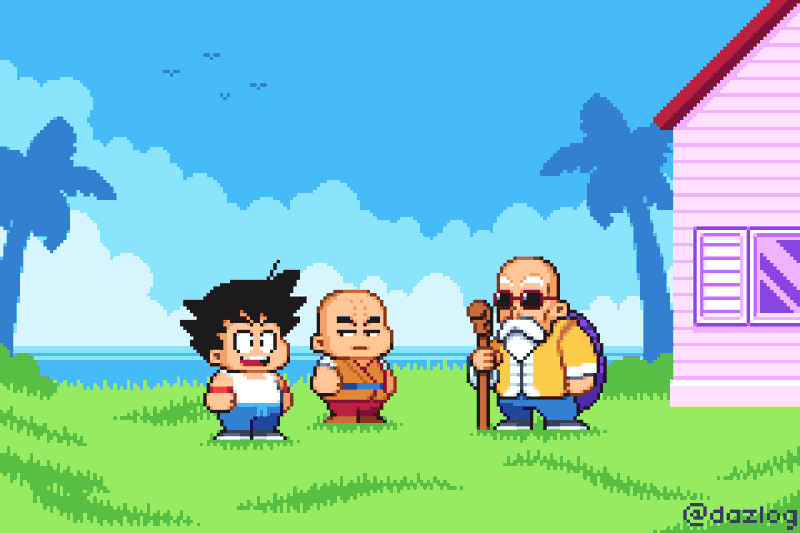
People often associate pixel art with retro games, which is where it originated. Many games use it just for that feel. But I believe that today, pixel art goes far beyond that. It’s not just an art style used to force nostalgia; it’s a medium in its own right with its own rules, even outside the world of video games.
How do you actually make pixel art, you ask? I don't know, don't ask me. I just mash the mouse until something looks halfway decent. You’re better off asking my friend Aspa, who is a real expert on the subject.
One thing I’ve learned from him is that the color palette is incredibly important. It matters in any visual medium, but in pixel art especially, because of that interpretive quality I mentioned earlier.
I’ve often watched Aspa pick seemingly random colors and end up with a palette that makes perfect sense. But if you’re a mere mortal like me and don’t have that superpower, you can use Lospec, which has tons of palettes created by people with a great eye for color.
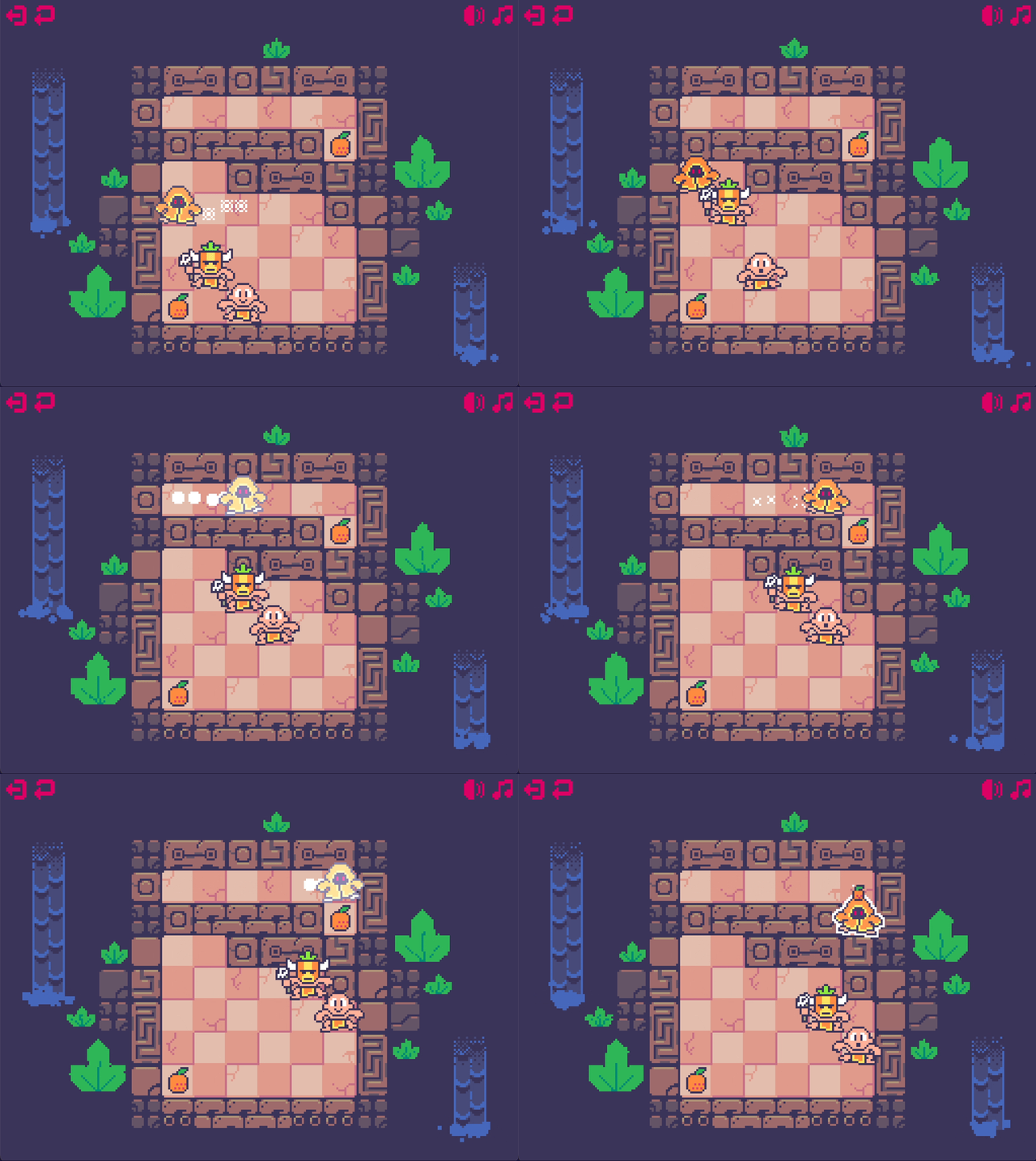
Design
Game design defines everything. What it’s about, how the player interacts with it, what the rules are... and all those elements combined determine whether a game is fun or not.
It’s a complex subject, and it’s hard to even scratch the surface of such a broad field. But I can point you toward some resources to help you break in. My favorite book on the topic is Level Up! by Scott Rogers. Game Maker’s Toolkit is a YouTube channel with a ton of great videos analyzing game design. And in Spanish, we have Leyendas y Videojuegos.
Personally, I like to focus heavily on game feel. How a game feels, how responsive the controls are, and a bunch of little tricks that keep the experience from being frustrating.
For example, one of those tricks is Coyote Time. This allows the player to jump even after they’ve started falling—something that makes no sense physically.

This happens so fast that the player doesn't even notice. In an attempt to time the jump perfectly, the player ends up hitting the Jump button a fraction too late. But from their perspective, they hit it in time. This is just a trick to keep the player from getting frustrated by something they’d perceive as unfair. Even though, objectively, it would be fair for them to die there. You were late, buddy.
All good games are full of these kinds of tricks, and I've always found them fascinating. I try to apply them to my own games, spending time on details that are technically invisible but make a game feel right. If you’re interested, I recommend watching a short talk by jwaaaap (Jan Willem Nijman, famous for Vlambeer and Nuclear Throne) called The art of screenshake.
Engine
I’ve been using the same engine almost since I started making games. It’s called Game Maker, and I’ve been using it since it was the side project of a university professor with the coolest last name on the planet: Mark Overmars.
It works well for me because it focuses on 2D games and is specifically great for pixel art. It also handles web exports really well, which I care about because it makes my games highly accessible. You don't have to download anything; you play right in your browser. For the small games I usually make, it’s perfect.
And I use it mainly because I know it inside out. I feel confident and comfortable with it; I know all its quirks. I'll admit it—it's my comfort zone and I'm staying put. Arrest me if that's a crime.
But there are many engines out there, some of which probably sound familiar, like Unity, Unreal Engine, or Godot. Since everyone knows those, I want to use this space to highlight some cooler tools that try something different by setting limitations that force you to get creative and find ways to break the boundaries:
Bitsy allows you to make small games or interactive stories.
PICO-8 is a fantasy console—a fictional, hardware-less console that is essentially an engine with limitations designed to mimic old-school systems.
GB Studio lets you create real games for the GameBoy.
Programming
Many people find programming intimidating, especially those more inclined toward the creative or artistic side. But I think it’s like any other skill: it just requires an investment of time.
In fact, at this stage of my journey, I find programming one of the easiest parts of making a game. It’s about making things work and staying organized. At the very least, I think it’s simpler (and more objective and measurable) than making something look good or making it fun.
No offense intended. Programming can be much more complex if you want to, say, create your own engine instead of using one of those mentioned above. But if your focus is on getting something to work rather than knowing every detail of what's happening under the hood, it’s quite accessible.
Plus, there’s something very rewarding about thinking through and building systems.
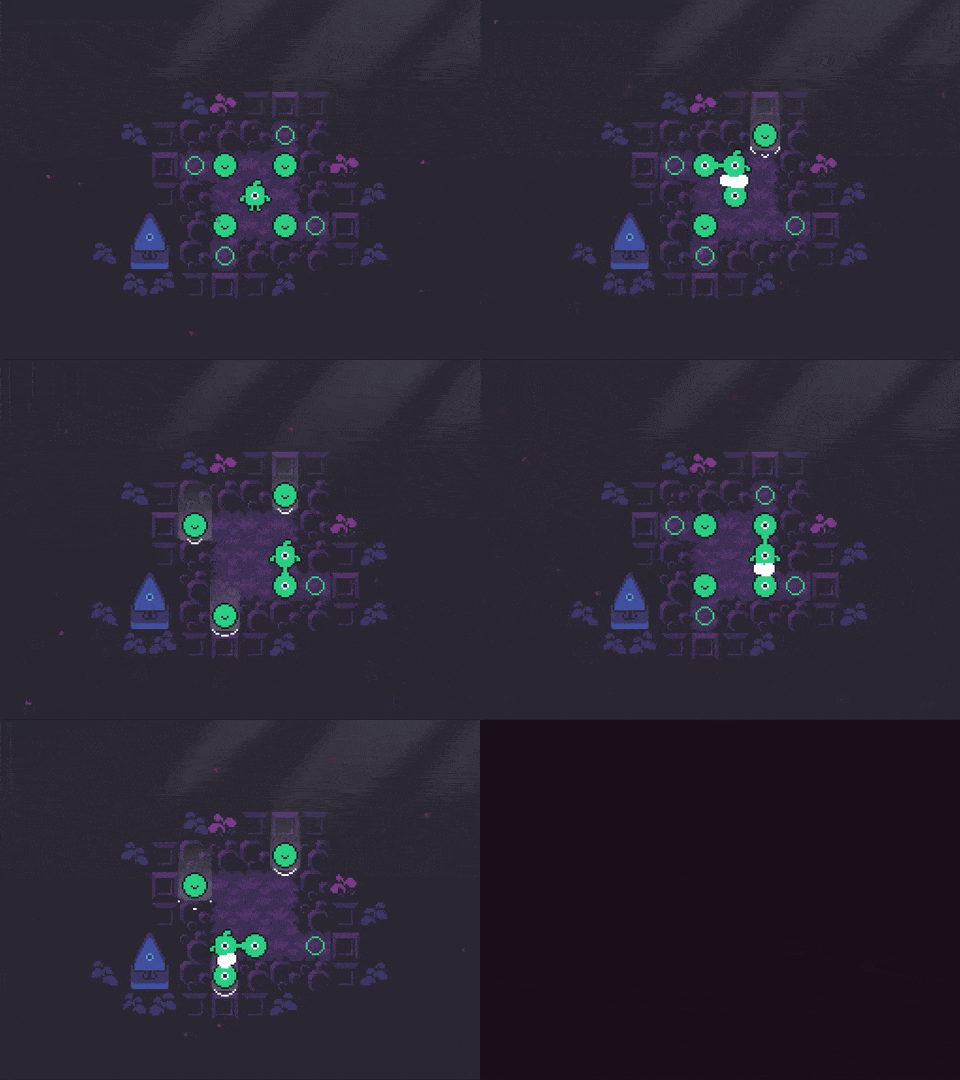
For instance, in this game I never finished, I remember enjoying (and getting frustrated by) creating various systems, like the way the character connects with other pieces or the ability to undo moves—essential for a puzzle game. Thinking about all the implications, defining it in a simple and maintainable way, and watching it all click into place is a very satisfying feeling.
In terms of specifics, the language I use is GML, which is native to Game Maker. Nothing too fancy. You’ll just need to adapt to whatever language your chosen engine uses.
Music
I know nothing about music. The closest I’ve ever come to music theory was when lil' Dani was forced to play a horribly out-of-tune version of the Andalusian anthem on the flute. And yet, it's one of the parts I enjoy most.
I guess not knowing theory allows me to approach this world with a curious and lighthearted perspective. And without any expectations. I just open up a program, start tinkering, and after a good few hours, I end up feeling really proud of the incredible 3 seconds of audio I’ve managed to create.
Come to think of it, I wish I could take that same approach to other things. Just being curious, expecting nothing, and enjoying the process.
I've used BeepBox to make music for my games. It’s great because it’s very simple, and if you're going for a retro sound, it works quite well. I used it for AGLOBO during a game jam (meaning I didn't have much time), and hey, it turned out pretty interesting.
How do you make music, you ask? I don't know, don't ask me. I just mash the keyboard until something sounds halfway decent. But you can ask my friend Oli; he’s a total expert.
Sound Effects
This isn't exactly my forte, and I'm sure I don't give it the importance it deserves. Being deaf as a post probably doesn't help. But I can tell you how to get by, especially in game jams where you don't have much time to improvise or learn something new.
To create sound effects, I use Bleeper, which lets you create sounds intuitively—almost as if you were playing a game. It’s a lesser-known tool that works great for me. Or Bfxr, which generates them for you, letting you tweak parameters until they're to your liking. Or just go to freesound and look for royalty-free audio.
If you’re feeling inspired and don’t mind making a bit of a fool of yourself, you can try foley. Case Portman is an artist I really like who I’ve crossed paths with at a few game jams, and he does cool stuff like this. For my game BOBO GOOEY, I recorded myself making mouth noises for the character. The peak of my career, if you ask me. But it was a lot of fun.
Marketing
What is this? Is it edible?
Jokes aside, it’s not something I’ve worried about much. I make games as a hobby for the creative pleasure, so I haven't spent a lot of time on it.
I am lucky enough to have a good number of followers on Itch.io, where I host my games. Every time I upload a new one, they all get an email and it appears on their feed. If you want your game to reach people, this is quite important: having a follower base—people who like what you do.
The few tips I can offer are:
Make your game look attractive. The cover image, the name, the description... everything is an opportunity to stand out.
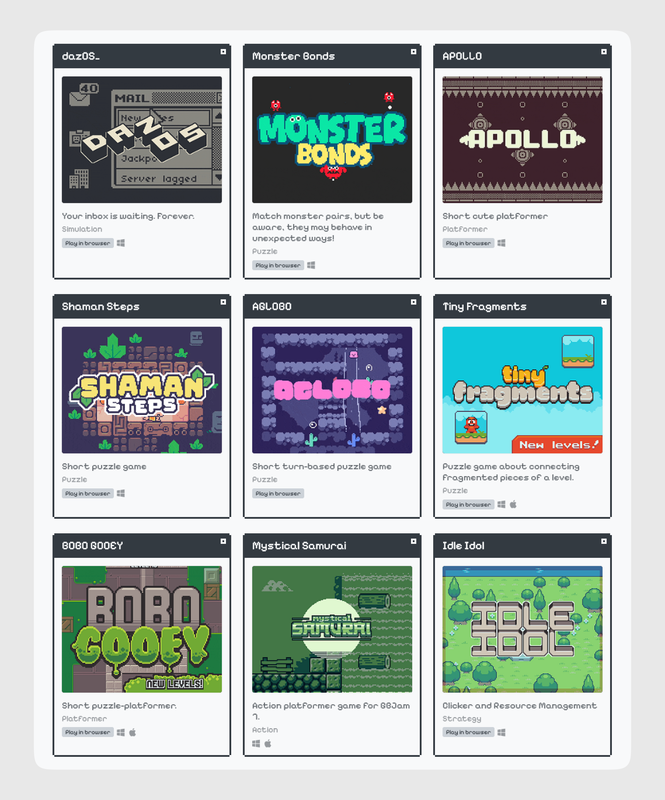
Connect with cool people—other creators who support you. Not even for marketing purposes, but just to build connections. These people will help you with your creative endeavors, and you’ll be able to help them in return. Sharing is caring 🌈
Use other platforms and social media to spread the word. For example, you could write on Fika about what you know regarding game development. Or about anything else. Exactly! You fell for it! Gotcha! This whole thing was just a diabolical marketing tactic of mine, ha!
Profit
Can you make money making games? Yes, in many ways.
As I’ve said, I have a very different approach to this. For me, making games is a hobby, and I keep the financial side in the background as something optional. I want it to remain a creative outlet I enjoy without restrictions; turning it into something that must make money would ruin that for me.
An obvious way to profit from your games is selling them on platforms like Steam. It can work, but it’s a saturated market with tons of games released daily. Without a solid plan, your game will likely come and go without much notice.
Something that has worked well for me—which isn't done as often and offers a good balance between profit and the "hobby" feel—is selling non-exclusive licenses to web portals. We all grew up with sites like Miniclip. These portals buy licenses for small games. You make a version for them with their logo at the start, connect to an API so they can show ads between levels, and voilà. Plus, since they’re non-exclusive, you get less per license but can sell the game to multiple portals.
There are a thousand other ways to make money that I haven't tried. Do a Kickstarter campaign. I've seen people create custom games for clients to give as birthday gifts. Sell assets for other people to use. It just takes a bit of thinking and imagination.
A quick note on AI
I don't use generative AI in any part of my game creation process. This is something I do for pleasure and creative interest; letting a machine do it would, for me, kill the magic. If only AI could do my laundry instead.
And that’s all! It’s a real achievement that you made it this far after such a long rant. I hope you learned something new about game dev or at least had fun reading.
If there’s any topic you’d like me to cover in more depth, let me know!

Comments
I think that playing games my entire life is my ultimate goal. :) It must be very very tiresome to make games, like not boring but time consuming?
Una dia me tienes que enseñar lo de publicar en esos portales